It is questionable if there is a junior football
club in the British Isles possessed of such an extensive and up-to-date
enclosure as that which Newtongrange Star will officially open on
Monday next. The Star as a club has had a wonderful career, having
for the past five seasons in succession won the Midlothian League,
with which goes the “Edinburgh Evening News” Cup. These
successes naturally drew a large following round them, and the scanty
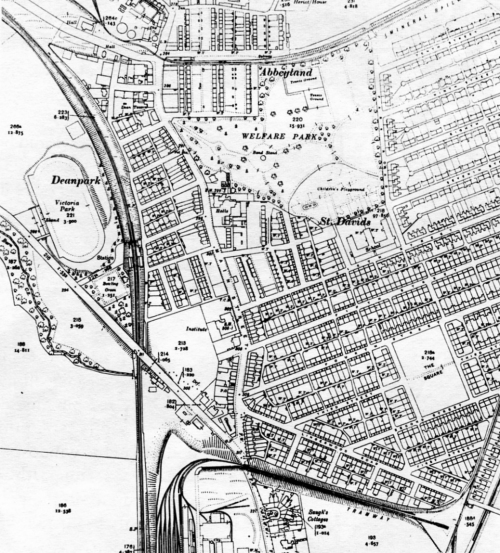
enclosure at their disposal in the Welfare Park on the east side of
the railway was found inadequate. In addition to football enthusiasts,
there are various other sporting bodies in this mining village, and
when pastures new were sought for the Star it was decided to provide
accommodation in the enclosure for all the sporting bodies.
The New Ground
Mr M. MacKay, the agent for the Newbattle Colliery Company, who is
one of the moving spirits behind the Star, was instrumental in procuring
an excellent park of about 10 acres, leased by the Colliery Company,
on the Marquis of Lothian’s estate. The new ground lies to the
west of the railway line, and borders on the main road from Edinburgh
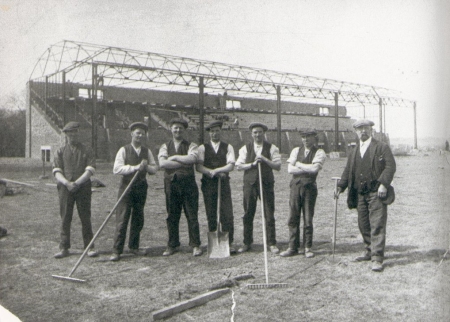
to Galashiels. Here during the past nine months the work of reconstruction
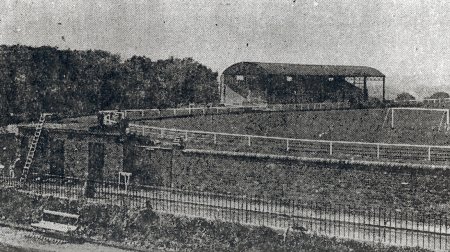
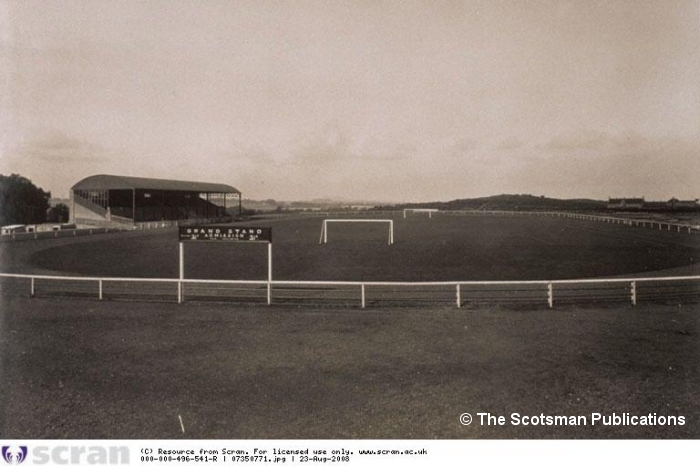
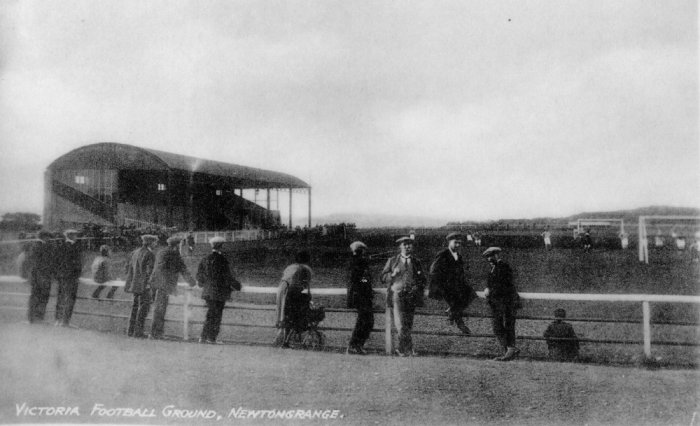
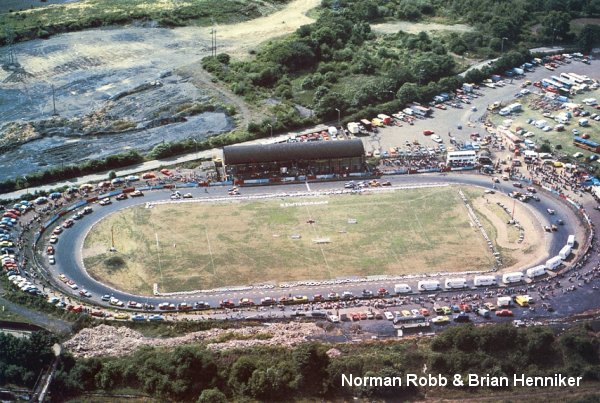
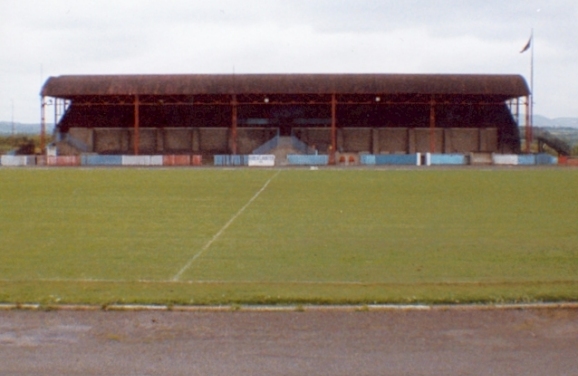
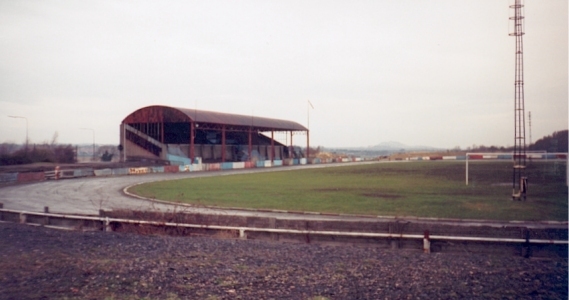
has been going on, and today there stands an admirable sports ground
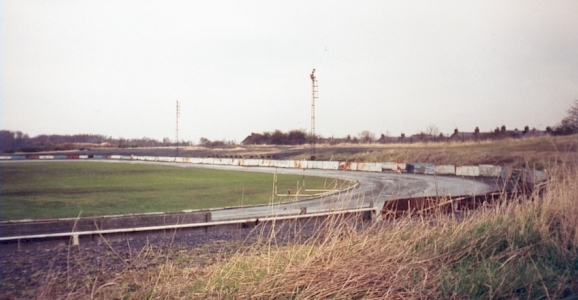
which would cause envy to many Second League clubs. A fine level pitch,
beautifully turfed with grass from the Murrayfield ground now being
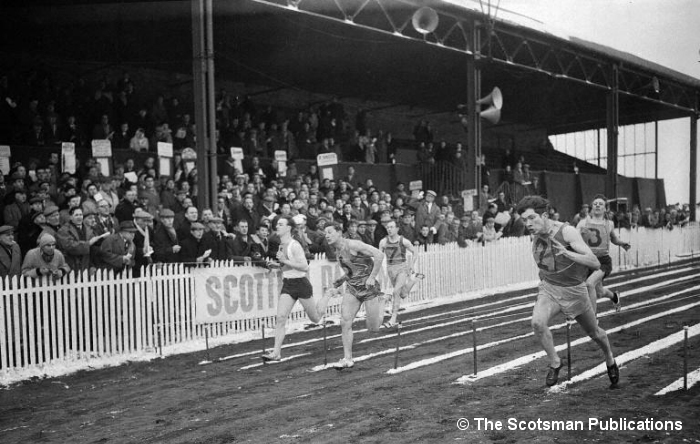
laid out for the Scottish Rugby Union, is bordered with a quarter-mile
cinder track ten yards wide, and with a “straight” in
front of the stand of 150 yards where, in due course, the whippet
racers will get busy.
All in One
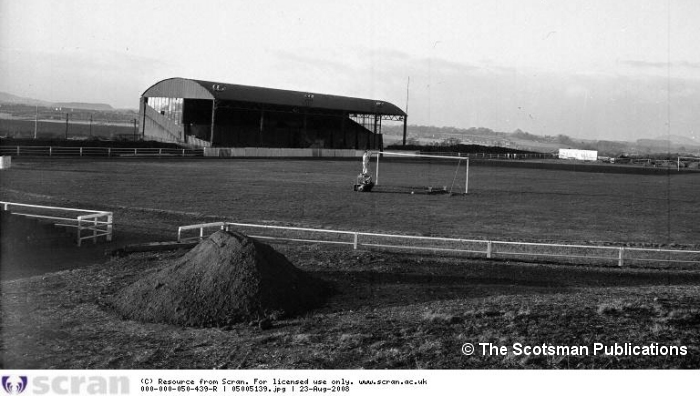
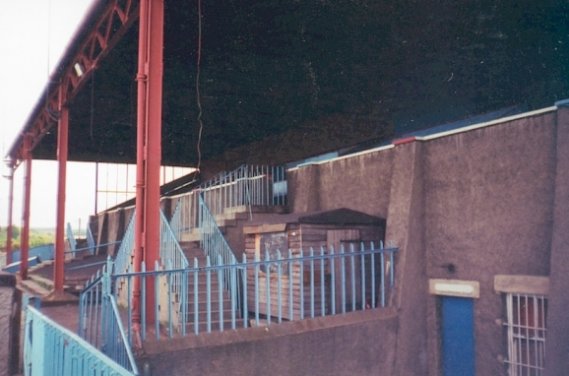
The stand, which is of steel girders and harled brick, is the great
feature of the new ground. About 160 feet long, with nine rows of
seats, it will accommodate 900 spectators, while the terraced enclosure
in front will hold 300 to 400 more, and all will be under cover. On
the ground floor of the stand spacious dressing-rooms for the home
and visiting teams have been laid out, to each of which is attached
a bathroom. There is no communal plunge bath in these, but instead
there are individual spray baths with hand and overhead sprays. The
heating is done by a high pressure boiler at the rear of the stand,
while in addition, gas fires will be installed in the dressing and
committee rooms. The football committee and referee’s rooms
adjoin the dressing-rooms, while, in addition, the ground floor contains
storerooms and premises for the Homing Society, the Quoiting Club,
and the Boxing Club. The last-named action is under the supervision
of the ex-amateur champion Dave Gordon, who, when an Evening News
representative inspected the enclosure recently, was busy supervising
the erection of a stationary ring. When this is completed tiers of
seats will be raised and thus in a compact little gymnasium the boxing
section will be able to run club tournaments and comfortably “house”
their staunch supporters.
Radio and Riflemen
The most pleasing feature about the whole establishment is that each
section is separate. On the first flat the Radio Club will have their
own hall. Even the marksmen have not been forgotten, for adjoining
the radio room a miniature rifle range of 25 yards had been constructed.
The bowling section, of course, has been established for a long number
of yards, and has its own green and pavilion to the south-east of
the new enclosure, but the quoiters have a fine new pitch at the north
end. Some idea of the extent of the new park may be gathered from
the fact that two practice football pitches have been laid our on
the north side, so that the club pitch will only be used for competitive
games, and in the event of a dry season can be watered from the two
hydrants which have been installed, the supply coming from the River
Esk.
Happily Situated
Generally the ground could not be more happily placed for either rail
of road traffic. The station is not 50 yards away from the main public
entrances, which are in Station Road, opposite the bowling green and
here a range of four turnstiles has been erected in the brick wall
which will eventually encircle the found. The main gate at the back
of the stand solely for the use of players and officials, there is
an entrance to the stands adjoining, while admission can also be gained
to the stands from the public enclosure. The majority of the work
has been performed by local tradesmen, one of whom, Mr. P. Forsyth,
who is responsible for the cement work will be recalled, as a former
goalkeeper for Bonnyrigg Rose. The banking and cinders for the track
have been supplied from the colliery, while many of the girders used
as uprights in the fending which is most complete, had previously
seen service in the mines. When the banking if completed the ground
will comfortably hold 20,000.
A Cheery Outlook
So far as the prospects of Newtongrange Star are concerned, all the
local officials are optimistic. They may not have opened the season
in too brilliant a fashion, but it must be remembered they have been
playing away from home. Moreover, they lost three food men in Ramage,
Alston and Duncan, all of whom went the St Bernards. Still they have
signed 20 men for the season just commenced, and with seven prominent
juveniles from the Edinburgh clubs now in the ranks they are quite
hopeful of retaining the Evening News Trophy. What might handicap
them is the perfection of the own playing pitch as compared to the
many inferior ones on which they have to perform, but they can pride
themselves on the possession of an enclosure worthy of their seniors
and a tribute to the sporting community of Newtongrange. On the opening
evening Raith Rovers will be their visitors.
The cost of the whole project was £5,000.
Source: The Edinburgh Evening News (14th Aug. 1924)